
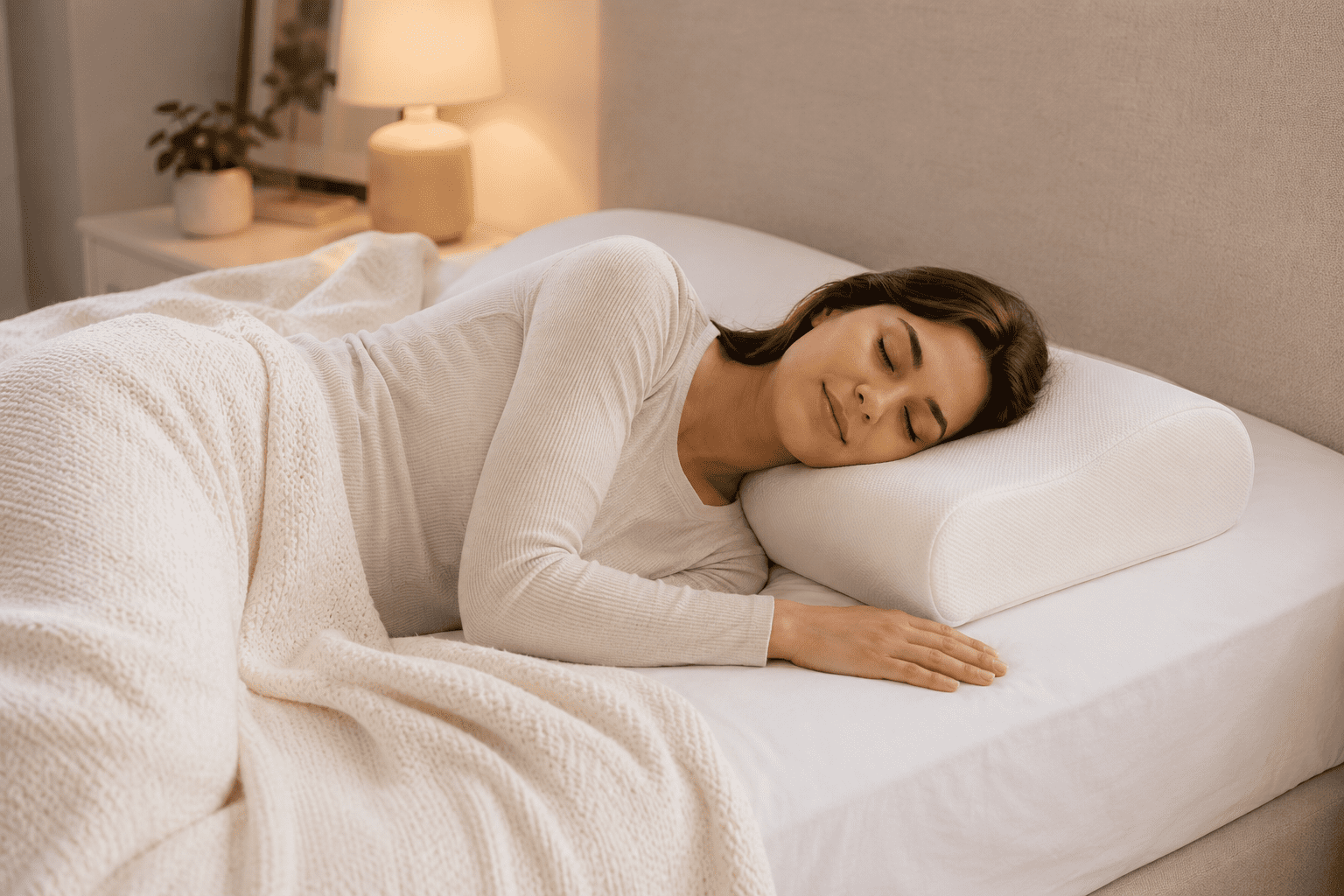
Many people wake up with neck pain, shoulder stiffness, headaches, or a feeling that they simply did not sleep well.
While several factors may contribute to these issues, sleeping position is often overlooked. Because we spend several hours in the same position every night, the way we support our head and neck may have a meaningful impact on comfort and sleep quality.
Are You Waking Up With Neck Pain?
If you regularly wake up feeling stiff or sore, your sleeping posture may be worth evaluating.
Common signs of inadequate support may include neck stiffness, shoulder tension, morning headaches, restless sleep, and general discomfort upon waking.
Many people focus on their mattress but give little thought to how their head and neck are positioned throughout the night.
Why Alignment Matters
When your head is positioned too high, too low, or at an awkward angle for several hours, muscles and joints in the neck may be placed under unnecessary stress.
A sleep setup that helps keep the head and neck in a more neutral position may help promote greater comfort throughout the night.
The Tech Neck Connection
Today’s technology may also play a role.
Many adults spend hours each day looking down at phones, tablets, and computer screens. This forward-head posture, often referred to as tech neck, may place additional strain on the neck and upper back.
When daytime posture challenges are combined with poor sleeping posture, discomfort may become even more noticeable.
Simple Changes May Help
If neck discomfort is affecting your sleep, consider the condition of your pillow, your primary sleeping position, your posture during the day, and how often you take breaks from screens.
Even small changes may contribute to improved comfort over time.
How Cervical Support Products May Help
Cervical pillows and other ergonomic sleep products are designed to help support the natural contours of the head and neck.
While no product can guarantee specific results, many people find that proper support may contribute to better sleeping posture, improved comfort, and a more restful night’s sleep.
The goal is not to force the body into a position. Instead, it is to create an environment that encourages healthy alignment while you sleep.
Final Thoughts
Neck pain, headaches, and poor sleep can sometimes be connected in ways that are easy to overlook.
By paying attention to sleeping posture, daily habits, and proper support, you may be able to reduce unnecessary strain on your neck and wake up feeling more refreshed and comfortable.